Jota: A Guide to Istria's Hearty Sauerkraut and Bean Soup
Warming and rustic, jota is the traditional soup of Istria, combining sauerkraut, beans, potatoes and often smoked meat. Here's what makes it a regional staple.
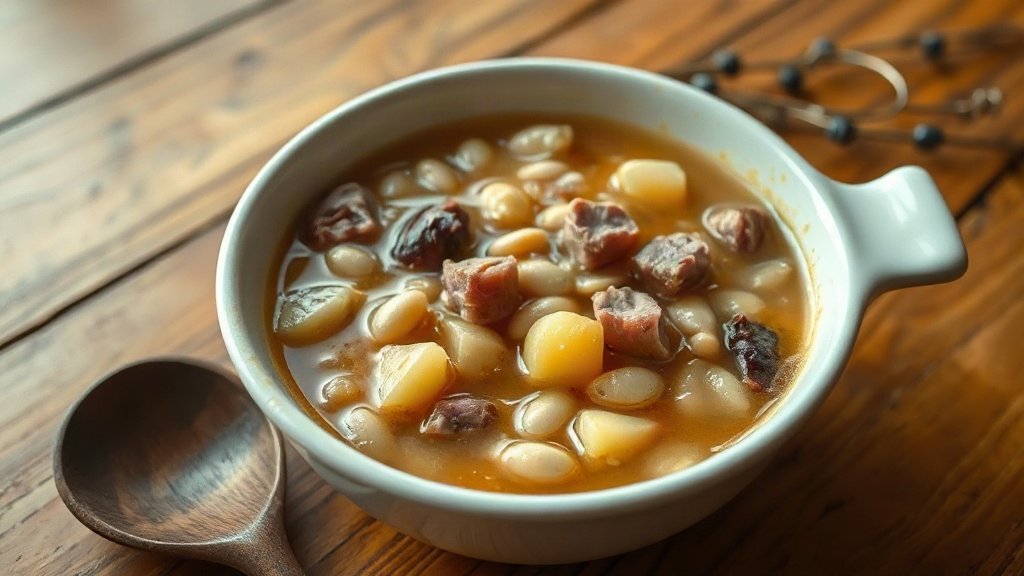
Illustration: AI-generated image
When the bora wind sweeps across the Istrian peninsula, locals turn to a bowl of jota. This thick, rustic soup is a cornerstone of Istrian home cooking, born from the region's history of humble, resourceful peasant cuisine. Made from a handful of pantry staples, jota transforms simple ingredients into a deeply comforting meal that has sustained families for generations.
What is jota?
Jota (pronounced yo-tah) is a hearty soup or stew that typically includes sauerkraut, dried beans, potatoes, and often smoked pork such as bacon, ribs, or sausage. The sauerkraut gives the soup a distinctive tangy flavour, while the beans and potatoes provide body and heartiness. It is a prime example of 'cucina povera' – the 'poor kitchen' – that characterises so much of Istrian cooking, where nothing goes to waste and simple ingredients are elevated through slow cooking.
The key ingredients
The soul of jota lies in its sauerkraut, known locally as kapus or crauti. Traditionally, families would ferment cabbage in large barrels each autumn to last through the winter. The sauerkraut is rinsed to remove excessive saltiness but still retains enough pucker to balance the richness of the meat. Dried borlotti or cannellini beans are commonly used, soaked overnight and cooked until creamy. Potatoes, onions, garlic, and sometimes a bay leaf or a sprinkle of pepper round out the flavour.
Regional variations
While jota is most associated with Istria, variations exist across the broader region. In Slovenian Istria and the Karst area, jota may be made with turnip instead of cabbage, resulting in a sharper, more pungent broth. Some cooks add a little tomato paste for colour and sweetness, while others keep it pale and brothy. In more frugal versions, no meat is used, but a spoonful of lard or a piece of pork rind might enrich the pot. Each family has its own ratio of sauerkraut to beans, some preferring a soupier consistency and others a thicker, stew-like texture.
How jota is served
Jota is a main course in itself, typically served in deep bowls with a thick slice of crusty bread. It is often accompanied by a glass of young red wine, such as Teran or Refosco, whose acidity cuts through the richness. In rural households, jota was traditionally cooked in a large pot over an open fire after a morning of agricultural work, making it a practical one-pot meal. Today, it appears on menus at many Istrian konobas (taverns) and agritourism farms, especially during the cooler months. Leftover jota is said to taste even better the next day, as the flavours meld further.
A taste of Istrian heritage
For visitors, ordering jota offers a direct link to Istria's culinary past. It is a dish of resilience and seasonality, reflecting the region's once-isolated geography and reliance on stored foods. While modern recipes may include more meat or refined ingredients, the essence remains unchanged: a simple, soul-warming soup that celebrates the humble sauerkraut.