Moreška: A Guide to Korčula's Historic Sword Dance
Discover the dramatic sword dance of Korčula, a centuries-old tradition that blends battle, romance and local identity.
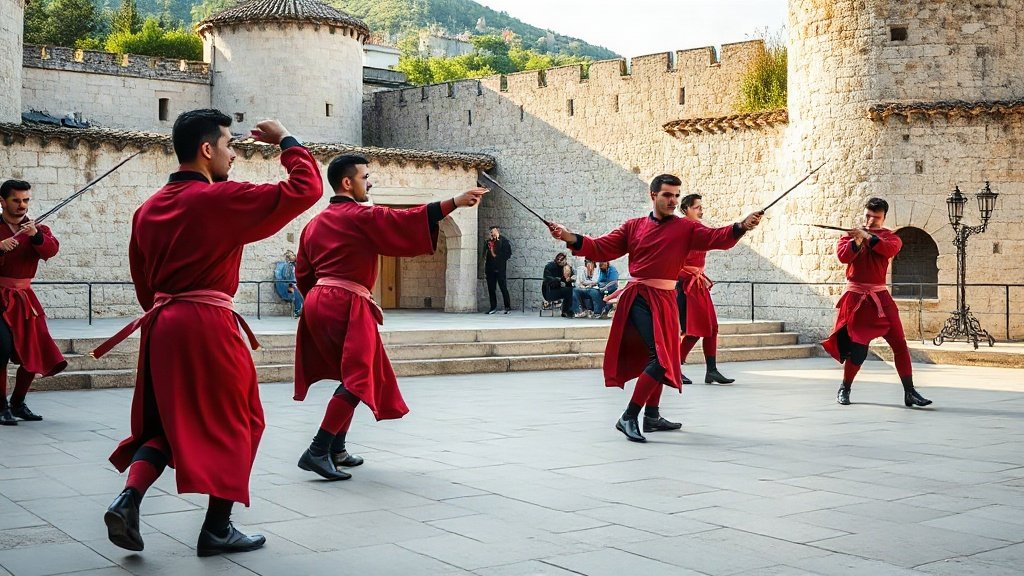
Illustration: AI-generated image
The Moreška is a dramatic sword dance performed on the island of Korčula, one of Croatia's most distinctive cultural traditions. Often mistaken for a folk dance, it is actually a stylised battle between two kings, fought with real swords and set to a stirring musical score. The dance tells a story of love, conflict and reconciliation, and it has become a symbol of Korčula's identity.
Origins and History
The exact origins of the Moreška are debated. Some scholars trace it to the Mediterranean tradition of Moorish and Christian dances, which spread from Spain in the Middle Ages. The name itself comes from the Spanish word 'morisca', meaning 'Moorish'. Over time, the dance evolved on Korčula into a localised performance with a unique storyline. It was once performed across Dalmatia, but today Korčula is the only place where the full version survives.
The Story of the Dance
The Moreška tells the story of the Red King and the Black King, who fight over a captured princess. The Black King, representing the Moors, has taken the princess, and the Red King battles to free her. Through a series of choreographed sword clashes and parries, the Red King eventually triumphs, and the princess is released. The dance is performed entirely by men, with the role of the princess traditionally played by a male dancer, though this has changed in recent years.
Performance and Music
The dance is accompanied by a small brass band or, in some performances, a modern orchestra. The music is a mix of martial rhythms and lyrical passages that mirror the action. The performers wear colourful, Ottoman-inspired costumes, with the Black King's side in dark colours and the Red King's side in bright red and gold. The swords are real, though blunted, and the dancers must undergo rigorous training to perform the intricate steps and clashes safely. The performance lasts around twenty minutes and is a feat of stamina and precision.
Where and When to See It
The Moreška is performed regularly in Korčula Town during the summer months, traditionally on Thursday evenings, but it is wise to check local listings. The dance takes place in an open-air setting, often on a purpose-built stage near the town walls, adding to the dramatic atmosphere. Because it is tied to tourism, the schedule may vary, but the tradition remains deeply rooted in local culture, with many families passing down the roles through generations.
Why It Matters
The Moreška is not just a tourist attraction; it is a living link to Korčula's past. It has been performed for centuries, and in 2014 it was included on Croatia's list of intangible cultural heritage. For visitors, watching the Moreška is a chance to witness a unique blend of history, music and athleticism that has survived against the odds. It is a reminder that traditions are not static—they adapt and evolve while keeping their core spirit.