Orehnjača: A Guide to Croatia's Beloved Walnut Roll
Discover orehnjača, the traditional Croatian walnut roll that graces festive tables across the country. Learn about its history, how it's made, and where to find the best slices.
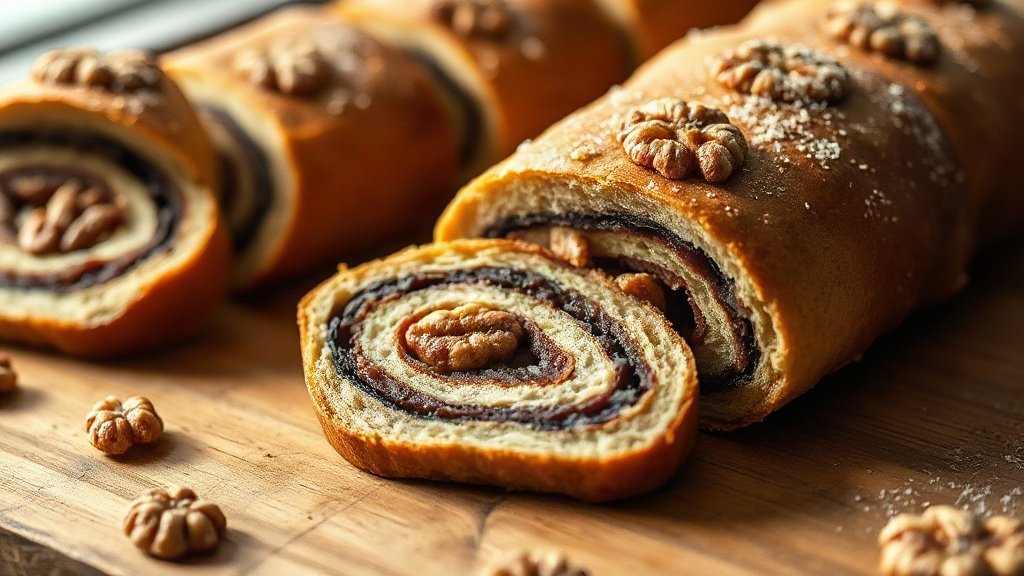
Illustration: AI-generated image
In the heart of northern Croatia, few aromas signal the arrival of holidays like the sweet, nutty scent of orehnjača baking in the oven. This beloved walnut roll, also known as povitica or orahnjača, is a staple of festive tables from Zagorje to Slavonia. With its soft yeast dough and rich walnut filling, it is a true taste of Croatian tradition.
What is Orehnjača?
Orehnjača is a sweet yeast bread rolled with a generous filling of ground walnuts, sugar, and often milk or cream, with hints of rum, vanilla, or lemon zest. The dough is rolled thin, spread with the walnut mixture, then carefully rolled into a log and baked until golden. Some versions are braided or shaped into a ring, but the classic form is a simple elongated loaf that reveals a beautiful spiral when sliced.
The name comes from the Croatian word for walnut, orah, and the suffix -njača, which indicates a dish made from a specific ingredient. In some regions, particularly in Međimurje and Zagorje, it is called povitica, derived from the verb poviti, meaning to wrap or roll.
A Festive Tradition
Orehnjača is deeply tied to Christmas and Easter in Croatia. For many families, the holidays would not be complete without at least one roll on the table, often baked in large batches and shared with neighbours and relatives. It is also a common treat for weddings, christenings, and other celebrations. In the past, making orehnjača was a multi-day process that involved grinding walnuts by hand and letting the dough rise slowly, and it was often a communal activity among women.
While it is most associated with winter, orehnjača is enjoyed year-round. Bakeries and cake shops across northern Croatia sell it by the slice or whole, and many home cooks keep a family recipe passed down through generations.
How It's Made
The base is a rich yeast dough made from flour, milk, eggs, butter, and sugar. After the first rise, the dough is rolled out very thinly—sometimes until it is almost translucent—on a floured surface. The filling is made by combining finely ground walnuts with sugar, and often adding warm milk, melted butter, eggs, and flavourings such as rum, vanilla, or grated lemon zest. Some recipes include raisins, candied orange peel, or a layer of poppy seeds for variation.
The filling is spread evenly over the dough, leaving a small border, and the dough is rolled up tightly from one long edge. The roll is then placed seam-side down on a baking tray, left to rise again, and baked until deep golden brown. Once cooled, it is dusted with icing sugar or left plain.
Variations Across Croatia
While walnuts are the classic choice, a popular variation is makovnjača, made with ground poppy seeds instead. Some bakers combine the two fillings in one roll, creating a striking contrast. In Slavonia, the dough may be enriched with more eggs and butter, making it particularly tender. Shapes also vary: some households braid the roll, while others bake it in a ring or as individual buns.
Where to Try It
If you find yourself in northern Croatia—especially in Zagreb, Varaždin, or the Zagorje region—look for orehnjača in local bakeries, cake shops, or farmers' markets. During the holiday season, many cafés offer it as a seasonal dessert, often paired with coffee or a glass of sweet wine. For the most authentic experience, try a slice at a family-run konoba or during a rural celebration where homemade versions are proudly served.
Whether enjoyed with a morning coffee or as an after-dinner treat, orehnjača is a delicious reminder of Croatia's rich baking heritage and the simple pleasure of a well-made walnut roll.