Soparnik: A Guide to Croatia's Traditional Chard Pie from Poljica
Discover soparnik, the rustic Swiss chard pie from the Poljica region near Split, protected by EU law and beloved for its simple, honest flavours.
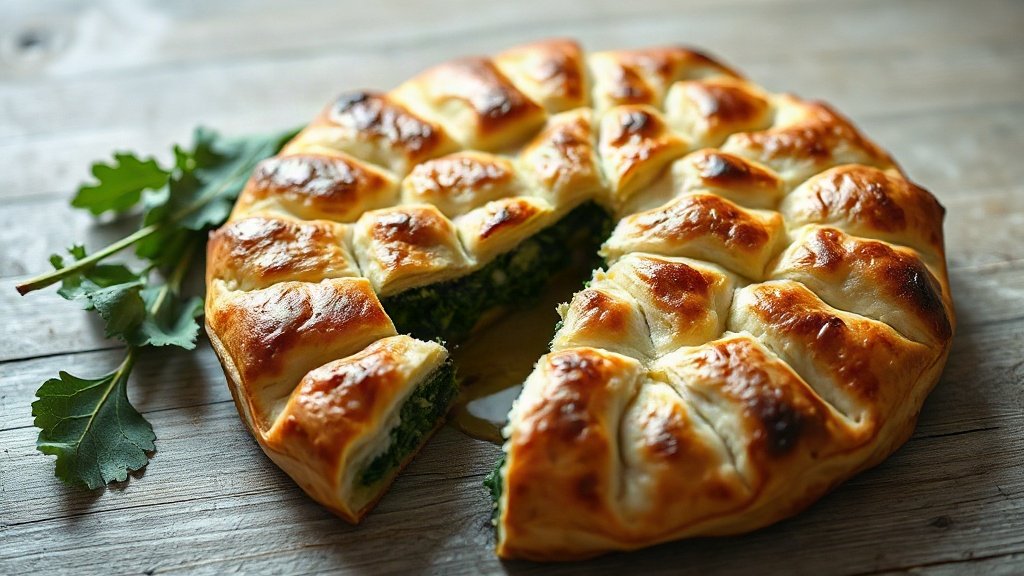
Illustration: AI-generated image
If you find yourself in Dalmatia with a craving for something authentically local, keep an eye out for soparnik. This large, round pie filled with Swiss chard and garlic is one of Croatia's oldest and most treasured dishes, hailing from the small region of Poljica near Split. With its crispy, paper-thin dough and aromatic, savoury filling, soparnik offers a delicious taste of Dalmatian culinary heritage.
What exactly is soparnik?
Soparnik (often called poljički soparnik) is essentially a savoury pie made from two layers of very thin dough with a generous filling of chopped Swiss chard, garlic, and olive oil. The pie is traditionally baked on a circular metal lid called a peka, covered with hot coals, which gives it a distinctive smoky char and a slightly crisp outside. Once baked, it is brushed with olive oil and often sprinkled with more garlic. The result is a comforting, rustic dish that is simultaneously light and deeply satisfying. It is naturally vegan, which adds to its modern appeal.
A dish with deep roots
This humble pie has been made for centuries in the Poljica region, a hilly area between Split and Omiš. It was traditionally prepared for festive occasions, such as Christmas, Easter, or village celebrations, but its simplicity meant it was also a practical way to use fresh greens from the garden. In 2016, poljički soparnik received Protected Designation of Origin (PDO) status from the European Union, officially recognising its cultural and geographical significance. This means that only soparnik made according to traditional methods within the designated Poljica area can bear the name.
How soparnik is made
The dough is a simple mixture of flour, water, salt, and sometimes a little olive oil, rolled out very thinly—often so thin you can almost see through it. The filling is made from Swiss chard (known locally as blitva), which is chopped and mixed with minced garlic, olive oil, and salt. The mixture is spread over one sheet of dough, then covered with a second sheet, and the edges are sealed. The pie is then placed on the heated peka, covered with embers, and cooked for around fifteen minutes until the dough is golden and slightly charred. After baking, the top is brushed with olive oil, and extra chopped garlic can be scattered over it before serving.
Where to taste authentic soparnik
If you want to try the real thing, the Poljica region is the place to go. Look for it at local konobas (traditional family-run taverns) and at food festivals celebrating Dalmatian cuisine. The village of Gata, in particular, is famous for its soparnik, and it often features at community events. While you may find versions elsewhere in Dalmatia, only those made within the designated area and following the traditional recipe can officially be called poljički soparnik. Some restaurants in Split also serve it as a starter or side dish.
Serving and pairing suggestions
Soparnik is traditionally cut into diamond-shaped pieces and eaten warm or at room temperature. It pairs beautifully with a simple tomato salad or a glass of local red wine, such as Babić or Plavac Mali. For a fuller meal, add some Dalmatian pršut and cheese on the side. Because it is not heavy, it also makes an excellent appetiser or a light lunch on a hot summer day. If you are lucky enough to visit during a festival, you might see it being made in large quantities over open fires—an experience that is as much about the atmosphere as the food.
Whether you are a dedicated foodie or simply curious about Croatian cuisine, seeking out soparnik is a wonderful way to connect with Dalmatia's rural traditions and flavours. Its simple ingredients and centuries-old preparation method offer a taste of history that remains deeply satisfying today.