A Guide to Međimurska Popevka: Croatia's Poignant Folk Song Tradition
Discover the melancholic beauty of Međimurska popevka, a traditional folk song style from northern Croatia that has earned UNESCO recognition.
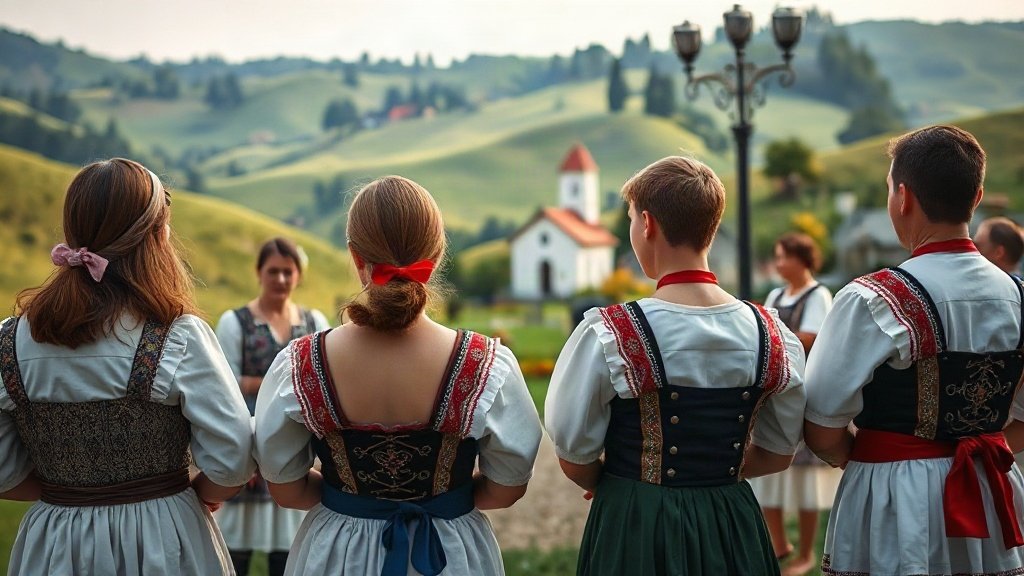
Illustration: AI-generated image
In the gentle rolling hills of northern Croatia, between the Mura and Drava rivers, a musical tradition has been passed down through generations, carrying the emotions of a region in every note. Međimurska popevka, the folk song of Međimurje, is more than just music—it is a living expression of local identity, recognised by UNESCO as an intangible cultural heritage of humanity.
What is Međimurska popevka?
Međimurska popevka is a distinctive genre of traditional vocal music that originates from Međimurje County, the northernmost part of Croatia. The word popevka itself means "song" in the local Kajkavian dialect, and the tradition encompasses a wide repertoire of lyrical, often melancholic melodies. These songs are typically performed solo or in small groups, sometimes accompanied by traditional instruments such as the violin or the cimbalom, a type of hammered dulcimer. The subject matter ranges from love and longing to nature, daily life, and the bittersweet experience of emigration, reflecting the region's history and emotional landscape.
A UNESCO-recognised tradition
In 2018, Međimurska popevka was inscribed on UNESCO's Representative List of the Intangible Cultural Heritage of Humanity. This recognition highlights not only the musical uniqueness of the tradition but also the vital role it plays in community life. The songs are performed at family gatherings, weddings, religious festivals, and public events, serving as a thread that connects generations. Many local cultural societies and amateur groups keep the tradition alive, teaching younger singers and ensuring that the old songs are not forgotten.
The distinctive singing style
What sets Međimurska popevka apart from other Croatian folk music is its characteristic vocal technique. Singers often employ a wide vibrato and a particular ornamentation that gives the melodies a plaintive, almost wistful quality. The songs are frequently sung in the Kajkavian dialect, which differs considerably from standard Croatian and adds a layer of local colour. Harmony is also a key feature; many popevka are performed in two-part singing, with a second voice weaving around the main melody in a way that feels both simple and deeply expressive.
Where to experience it
For visitors to Međimurje, the best way to encounter this tradition is through local events and festivals, where popevka is often performed alongside other regional customs. Even if you cannot attend a live performance, recordings and online archives offer a glimpse into this rich musical world. Listening to a popevka is like hearing a story unfold—one that speaks of home, heartache, and hope. It is a tradition that continues to evolve, with new songs being composed in the traditional style, proving that Međimurska popevka is not a relic of the past but a vibrant part of Croatia's living culture.