A Slow Guide to Dubrovnik: Exploring the Pearl of the Adriatic
Discover Dubrovnik's old town, city walls, island escapes and local rhythms in this slow travel guide to Croatia's most famous coastal city.
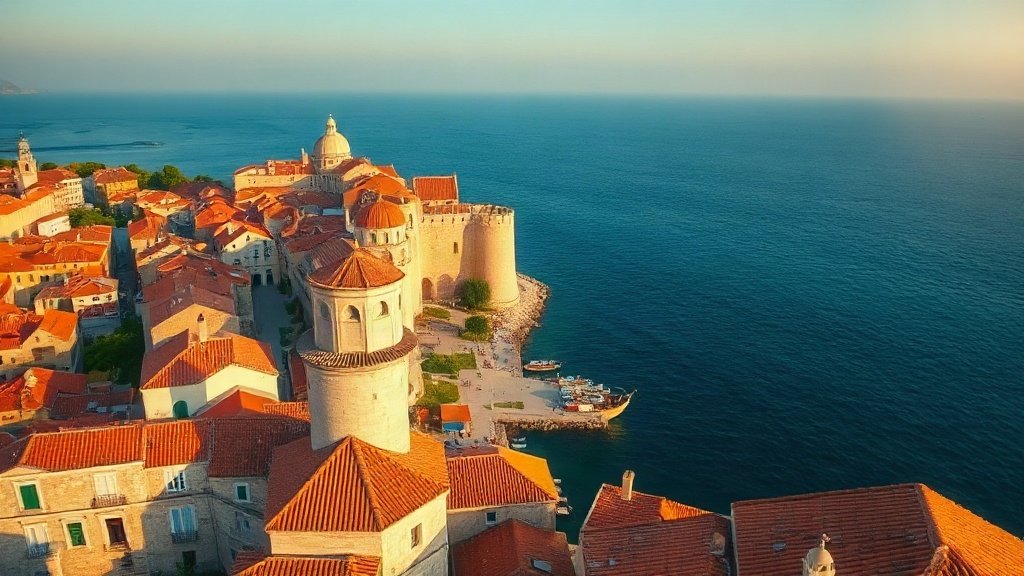
Illustration: AI-generated image
Dubrovnik needs little introduction. The walled city on Croatia’s southern coast has been drawing travellers for centuries, from medieval merchants to modern film crews. Yet beyond the famous fortifications and the polished limestone of the Stradun, there is a slower side to the Pearl of the Adriatic – one that rewards wandering without a plan, lingering over coffee and watching the light change on the terracotta rooftops.
Wandering the Old Town
Most visitors enter through Pile Gate, the western entrance guarded by a statue of St Blaise, the city’s patron saint. From here the main street, Stradun, runs straight to Luža Square, flanked by uniform baroque houses rebuilt after the 1667 earthquake. It is easy to tick off the highlights – the Rector’s Palace, the Franciscan Monastery with its old pharmacy, the Cathedral and Onofrio’s Large Fountain – but the real joy lies in the side lanes. Steep stone stairways climb towards the northern walls, while hidden courtyards and tiny chapels reward the curious.
Walking the City Walls
A circuit of the mighty walls is the classic Dubrovnik experience, and for good reason. The 2-kilometre loop offers ever-changing views over the orange roofs, the open sea and the island of Lokrum. Go early in the morning or late in the afternoon to avoid the midday heat and the largest tour groups. The walk involves many steps and uneven surfaces, so comfortable shoes are essential. From the highest point at the Minceta Tower, the panorama is unforgettable.
Escaping to Lokrum
Just a 15-minute ferry ride from the Old Harbour, Lokrum island is a nature reserve with pine forests, rocky coves, a botanical garden and the ruins of a Benedictine monastery. Legend says Richard the Lionheart was shipwrecked here in 1192. Swimming spots are rocky rather than sandy, but the water is clear and calm. The island also has a small salt lake known as the Dead Sea, ideal for a gentle float. No one is allowed to stay overnight, so by evening the island returns to its resident peacocks and rabbits.
Beyond the Walls
For a different perspective, ride the cable car up Mount Srđ, which rises behind the city. The top offers sweeping views across the old town and the Elaphiti Islands, and the Homeland War Museum housed in the Imperial Fortress is worth a visit. Closer to the centre, Banje Beach is the most convenient stretch of pebbles, while Sveti Jakov beach to the east is quieter and popular with locals.
Practical Tips for a Slow Visit
Dubrovnik is compact and pedestrian-friendly; the entire old town is car-free, so you will walk more than you expect. Consider staying a little outside the walls, in neighbourhoods like Lapad or Ploče, to experience local life and save money. Spring and autumn are the best seasons for mild weather and fewer crowds, as peak summer brings intense heat and cruise-ship crowds. Buses are reliable for reaching beaches and residential areas, and the cable car is the easiest way up Srđ. Finally, slow down: have a coffee on a square, sit on the harbour wall at sunset, and let the city reveal its timeless charm.