A Slow Guide to Trogir: Croatia's UNESCO Island Town
Trogir is a beautifully preserved medieval town set on a tiny island between the mainland and the island of Čiovo, just west of Split. Its stone streets, Venetian architecture and relaxed pace make it an ideal day trip or a quiet base for exploring central Dalmatia.
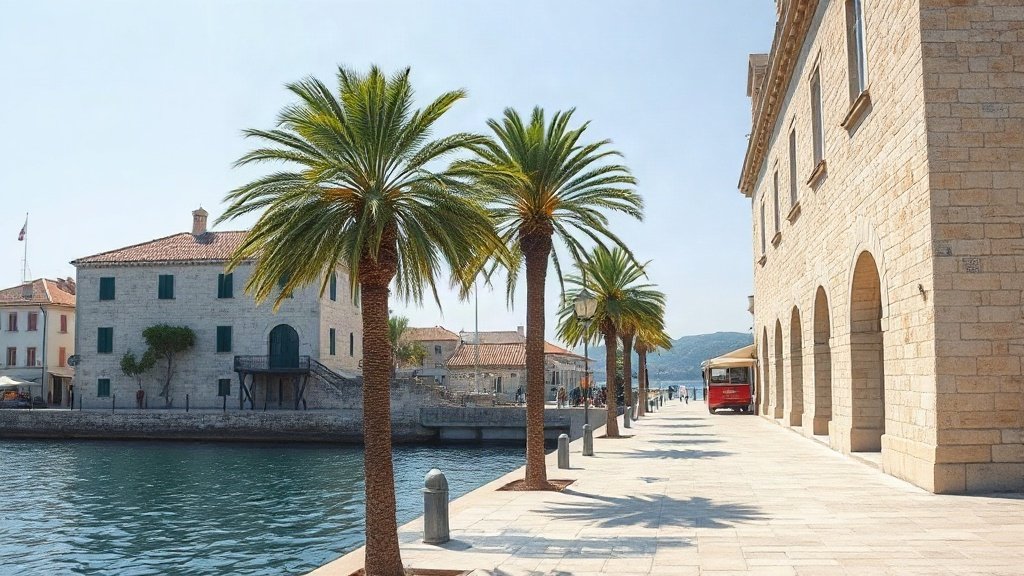
Illustration: AI-generated image
Trogir, a small town on Croatia's Dalmatian coast, sits on a compact island squeezed between the mainland and the larger island of Čiovo. Linked by bridges, its historic core is a maze of narrow stone lanes, elegant palazzos and quiet squares that have remained largely unchanged for centuries. The entire old town is a UNESCO World Heritage Site, recognised for its outstanding collection of Romanesque and Renaissance buildings.
The town's centrepiece is the Cathedral of St. Lawrence, whose main portal is a masterpiece of medieval stone carving by the local artist Radovan. Climbing the cathedral's bell tower rewards visitors with panoramic views over the terracotta rooftops and the surrounding harbour. Nearby, the charming main square is lined with the loggia, the clock tower and the Cipiko Palace, a fine example of Venetian Gothic architecture.
Fortresses and Waterfront
Trogir's coastline is defined by its fortifications. The imposing Kamerlengo Fortress, built by the Venetians in the 15th century, guards the western tip of the island. Its thick stone walls and towers can be explored, and the open-air courtyard sometimes hosts cultural events. A short walk along the broad seaside promenade leads to the smaller St. Mark's Tower and the city gate, where the old town begins.
The town's waterfront, lined with palm trees and café terraces, faces the busy channel where yachts and excursion boats come and go. It is a pleasant spot to sit with a coffee or ice cream and watch the world drift by, especially in the late afternoon when the light softens.
Getting Around and Nearby
Trogir is easily reached from Split by local bus, car or boat, making it a popular day-trip destination. The old town is entirely pedestrian, so visitors can wander freely without traffic. Beyond the historic centre, a short walk across the bridge leads to Čiovo island, which offers beaches, walking paths and a more residential atmosphere. The nearby airport at Resnik is one of Croatia's busiest, making Trogir a convenient first or last stop on a Dalmatian itinerary.
For those with more time, boat excursions from Trogir visit the nearby islands of Drvenik and Šolta, as well as the Blue Lagoon, a shallow, turquoise bay popular for swimming and snorkelling. Back in town, the market just outside the old walls sells fresh produce, local cheeses and lavender products, giving visitors a taste of everyday Dalmatian life.
Trogir's compact size, rich history and relaxed coastal setting make it an appealing destination for travellers who want to experience Croatia's heritage without the crowds of larger cities. Its stone streets invite slow exploration, and its waterfront offers a gentle introduction to the rhythm of the Adriatic.