Croatia's Other Cured Meats: Panceta, Ombolo and Šokol
Beyond pršut and kulen, Croatia has a delicious tradition of dry-cured pork cuts like panceta, ombolo and šokol. Here's how to find and enjoy them.
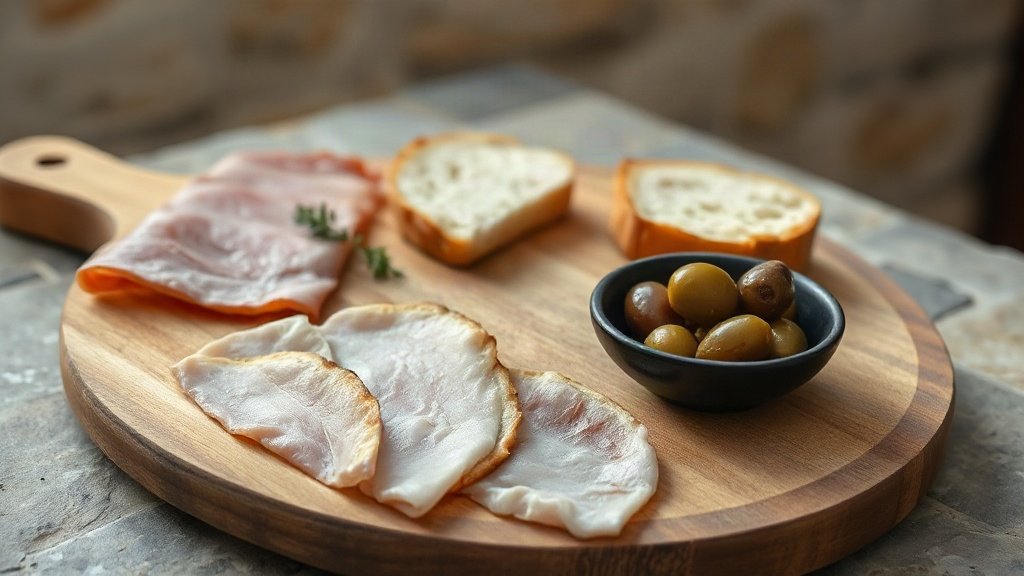
Illustration: AI-generated image
When travellers think of Croatian cured meats, pršut and kulen usually come to mind. But across the country's inland regions and along the coast, a whole family of other dry-cured pork specialities awaits.
Croatian charcuterie is deeply tied to the tradition of pig slaughter (kolinje) in late autumn. Families would preserve every part of the animal, using salt, smoke and time. The results are rich, concentrated and perfect for slow eating.
Panceta: Croatia's answer to pancetta
Panceta is made from pork belly, similar to Italian pancetta but often smoked. It is cured with salt, garlic and sometimes paprika or pepper, then hung to dry. The result is a firm slab with layers of meat and fat, intensely savoury and aromatic.
You'll find panceta in most Istrian and Dalmatian konobas, served as part of a cold platter or used in cooking. Thinly sliced, it's excellent on bread with a drizzle of olive oil, or fried until crisp to add depth to stews and pasta.
Ombolo: the cured loin
Ombolo comes from the pork loin, the same cut used for roast pork. In Croatia, the loin is salted, sometimes coated in herbs like rosemary and bay, and dry-cured rather than cooked. It becomes firm and sliceable, with a leaner profile than panceta but still a good amount of marbling.
This cut is especially popular in Istria, where it may be referred to as "ombolo istriano". It is often served as a starter, cut very thin and paired with local cheese and olives. Its mild flavour makes it a good introduction to Croatian cured meats.
Šokol: the cured neck
Šokol (or šokolada) is made from pork neck, a cut with generous fat. It is cured with salt and spices, then smoked and aged. The name might sound like chocolate, but it has nothing to do with sweets — it comes from the Italian "cioccolata" referring to the dark colour after smoking.
Šokol is robust and fatty, ideal for slicing thick and eating with bread. In Slavonia and Baranja, it is a staple on the table, often accompanied by fresh horseradish or pickled vegetables to cut the richness.
How to enjoy them
These cured meats are usually served as part of a "plata" (platter) with cheese, olives and bread. Look for them at local markets, where producers sell vacuum-packed slices or whole pieces. In restaurants, ask for "domaća plata" (homemade platter) to get a selection.
If you're travelling, consider bringing some home. Vacuum-packed panceta, ombolo and šokol travel well and make great souvenirs. Just check customs rules for your destination.
Pair them with a glass of Croatian red wine like Teran or Plavac Mali, or a rakija to start the meal. And remember: a little goes a long way.