How Croatian Cooperatives Work: A Traditional Business Model Still Going Strong
Cooperatives have deep roots in Croatia and remain a practical option for entrepreneurs, farmers and communities. Here's how they operate and why they matter.
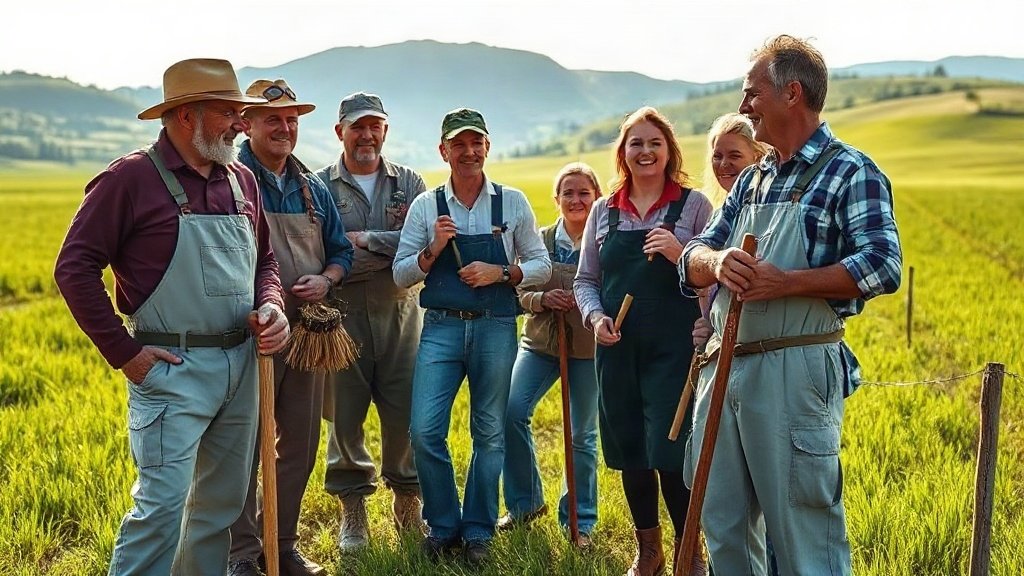
Illustration: AI-generated image
When most people think of starting a business in Croatia, they picture a d.o.o. or an obrt. But there is another, often overlooked option that has been part of the country's economic fabric for more than a century: the cooperative. Rooted in principles of shared ownership and democratic control, cooperatives offer a different way of doing business—one that remains surprisingly relevant today, especially in agriculture, crafts and community services.
For readers considering a venture in Croatia, understanding how cooperatives function can open doors to funding, networks and a business culture that values solidarity.
What exactly is a cooperative?
A cooperative is a business owned and run by its members, who share the profits and decision-making. Unlike a typical company where voting power usually depends on the size of your investment, each cooperative member generally has one vote, regardless of how much capital they contributed. This democratic structure is set out in Croatia's Cooperatives Act, which has governed these entities since 2011.
In Croatia, cooperatives can be formed by at least three founding members, who may be individuals or legal entities. There is no upper limit, and membership can grow over time. The law recognises several types, including agricultural, housing, consumer, worker and social cooperatives, among others.
A tradition with deep roots
Cooperative ideas arrived in Croatia in the late 19th century, inspired by movements elsewhere in Europe. Early cooperatives were often linked to farming communities, credit unions and craftsmen's associations. After the Second World War, cooperatives became part of the socialist economy, and while their role changed after independence, they never disappeared.
Today, cooperatives are most visible in rural areas, where they help small farmers pool resources, share equipment and reach larger markets. But they also exist in urban settings, providing services such as housing, childcare and renewable energy projects.
Why choose a cooperative?
For many, the appeal lies in the balance between economic goals and social values. Cooperatives often enjoy tax advantages—such as reduced profit tax rates for agricultural cooperatives—and access to specific grants and subsidies, particularly from EU funds aimed at rural development and social entrepreneurship.
Another benefit is risk sharing. Members combine their resources, which can make it easier to invest in machinery, storage or marketing that would be too expensive for an individual. And because members are also users or workers, there is a strong incentive to keep the business efficient and customer-focused.
Cooperatives also tend to be resilient during economic downturns. They are less driven by short-term profit and more by long-term stability, which can translate into steady employment and community support.
How to set one up
The process of founding a cooperative in Croatia is similar to that of a company, but with a few extra steps. You need to draft a founding act (the cooperative's rules), hold a founding assembly, and register with the commercial court. You will also need to appoint a management board and, if the cooperative has more than a certain number of members, a supervisory board.
Before you begin, it's worth consulting the Croatian Centre for Cooperative Entrepreneurship, a public body that offers free advice, training and help with applications for grants. Many local development agencies also provide support for cooperative start-ups.
One important point: cooperatives are not for everyone. They require a genuine commitment to democratic decision-making, which can be slower than a traditional top-down business. But for those who value collaboration and community, they offer a proven path.
Whether you're a farmer looking to modernise, a group of artisans wanting to share a workshop, or a community hoping to build affordable housing, a Croatian cooperative might be the right structure. In a country where tradition and innovation often meet, this old idea still has plenty of life left.