How to Make Orahnjača: Croatia's Beloved Walnut Roll
Orahnjača, a sweet yeast dough filled with ground walnuts, is a staple of Croatian celebrations and family gatherings. Here’s how to make it at home.
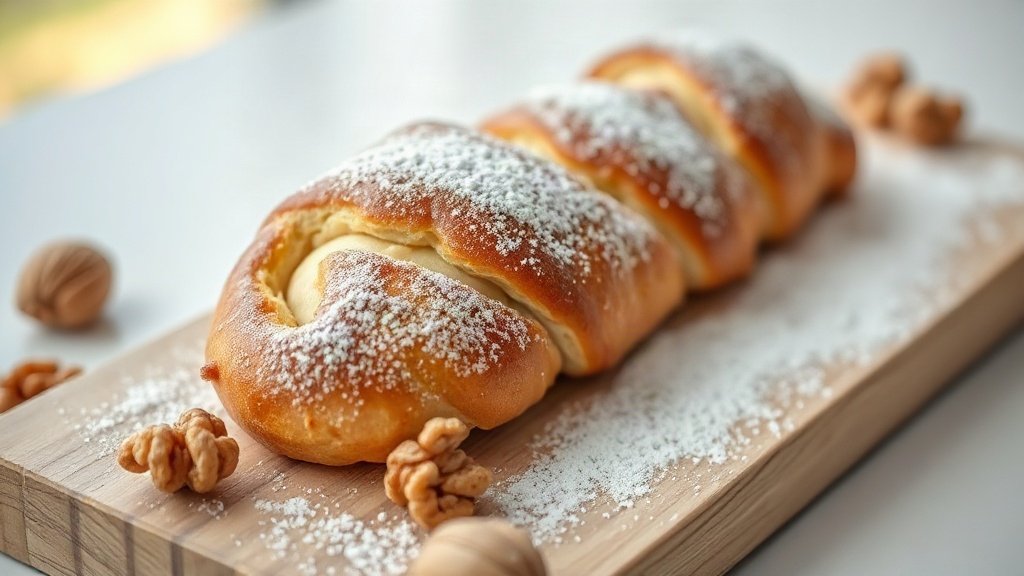
Illustration: AI-generated image
Orahnjača (also known as orehnjača in some regions) is a traditional Croatian pastry that appears on tables across the country, especially during holidays and family celebrations. Made from a soft, yeasted dough and a rich walnut filling, it is a beloved part of Croatia’s baking heritage.
A Pastry with Deep Roots
Walnut rolls are common throughout Central and Eastern Europe, but Croatia’s version has its own character. The name comes from “orah,” the Croatian word for walnut, and the pastry is especially associated with northern and central Croatia, where walnut trees are plentiful. Many families have their own recipe, often handed down through generations, and no two are exactly alike.
Ingredients You’ll Need
For the dough:
- 500 g all-purpose flour, plus extra for dusting
- 7 g dry yeast (or 20 g fresh yeast)
- 100 g sugar
- 100 ml warm milk
- 2 eggs
- 100 g butter, melted and cooled
- A pinch of salt
- Zest of half a lemon (optional)
For the filling:
- 300 g ground walnuts
- 150 g sugar
- 100 ml milk
- 50 g butter
- 1 teaspoon vanilla extract or a splash of rum
- 1 egg yolk (for brushing)
Step-by-Step Method
- Activate the yeast: In a small bowl, mix the yeast with a tablespoon of sugar and the warm milk. Let it sit for 10 minutes until frothy.
- Make the dough: In a large bowl, combine the flour, remaining sugar, salt and lemon zest. Add the yeast mixture, eggs and melted butter. Mix until a soft dough forms, then knead on a floured surface for about 10 minutes until smooth and elastic. Place in a lightly oiled bowl, cover and let rise in a warm place for about 1 hour, or until doubled in size.
- Prepare the filling: While the dough rises, heat the milk and butter in a saucepan until the butter melts. Remove from heat and stir in the ground walnuts, sugar and vanilla or rum. Let the mixture cool to room temperature; it should be thick but spreadable.
- Shape the roll: Punch down the dough and roll it out on a floured surface into a large rectangle, about 1 cm thick. Spread the walnut filling evenly over the dough, leaving a small border around the edges.
- Roll it up: Starting from the longer side, roll the dough tightly into a log, pinching the seams and ends to seal. Transfer to a baking sheet lined with parchment paper, seam-side down.
- Second rise: Cover the roll loosely with a clean kitchen towel and let it rise for another 30–45 minutes.
- Bake: Preheat the oven to 180°C (350°F). Brush the top of the roll with beaten egg yolk for a shiny finish. Bake for 30–40 minutes, or until golden brown and the roll sounds hollow when tapped on the bottom.
- Cool and serve: Let the orahnjača cool on a wire rack before slicing. It’s delicious warm or at room temperature, often dusted with icing sugar.
Tips for Success
- Make sure all dough ingredients are at room temperature for easier rising.
- Do not overfill; an overly thick layer of filling can cause the roll to crack.
- For a richer filling, add a handful of raisins or a splash of rum.
- Store leftover orahnjača wrapped in foil or in an airtight container; it keeps well for several days and can also be frozen.
Whether you’re continuing a family tradition or trying it for the first time, making orahnjača is a rewarding way to connect with Croatian culinary culture. The aroma of walnuts and yeast baking is sure to fill your kitchen with warmth.