Kulen: A Guide to Croatia's Spicy Sausage from Slavonia
Discover kulen, the paprika-rich cured sausage from eastern Croatia, and learn how it is made, how to enjoy it, and what makes it special.
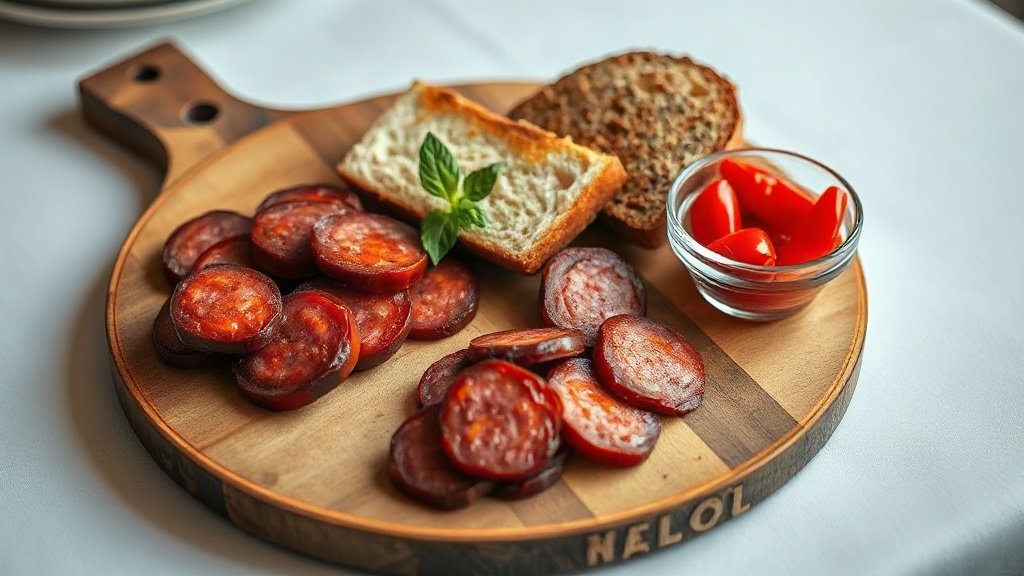
Illustration: AI-generated image
Among Croatia’s many cured meats, kulen holds a place of honour. This dark red, paprika-spiced sausage comes from the eastern region of Slavonia, where it has been made for generations. Its intense, slightly hot flavour and firm texture make it a favourite at festive tables and everyday meals alike.
What is kulen?
Kulen (sometimes called kulenova seka for a smaller version) is a dry-cured sausage made from high-quality minced pork, seasoned with salt, garlic, and – most importantly – sweet and hot ground paprika. The mixture is stuffed into a natural pork casing, then smoked and air-dried for several months. The result is a dense, deep-red sausage with a complex, smoky taste that lingers.
How is kulen made?
Traditional production follows a strict seasonal rhythm. Pigs are typically processed in late autumn, when temperatures are cool. The meat is carefully minced, mixed with spices, and left to rest so flavours meld. The sausage is then cold-smoked over hardwood – often beech or hornbeam – and hung to mature in well-ventilated cellars. Depending on size, kulen can age from three to twelve months, developing a harder texture and deeper flavour as it dries.
How to enjoy kulen
Kulen is almost always served thinly sliced, either on its own or as part of a traditional Slavonian platter alongside cheese, bread, and pickled vegetables. Because of its bold taste, a little goes a long way. The slices should be cut at room temperature to release their aroma. It is also sometimes used as an ingredient in cooked dishes, adding richness to stews, scrambled eggs, or even pasta sauces, but purists insist the best way is simply on a piece of fresh bread.
A protected tradition
In recognition of its cultural and culinary importance, kulen from Slavonia has been granted protected geographical indication status within the European Union. This means that only sausages produced in the region according to traditional methods may bear the name. Look for the PGI label to ensure authenticity.
While the classic kulen is fairly spicy, some producers make a milder version. The shape can also vary: the full-size kulen is thick and slightly curved, while the kulenova seka is smaller and thinner, ideal for a smaller household or as a gift.
In Slavonia, the making of kulen is more than just food preservation; it is a social event. Families often gather for the annual pig slaughter (svinjokolja) in late autumn, when the sausage is prepared. This custom strengthens bonds and passes recipes from one generation to the next.
Once you bring kulen home, keep it in a cool, dry place or in the refrigerator wrapped in paper. Before serving, let it come to room temperature for about half an hour, then slice it as thinly as possible with a sharp knife. Because the sausage is dense, a good slicer is helpful.
If you are visiting Croatia, particularly the eastern counties of Osijek-Baranja or Vukovar-Srijem, keep an eye out for kulen at local markets and family farms. Even outside Slavonia, many delicatessens and restaurants across Croatia serve it. Tasting a few slices is a simple way to connect with a tradition that has shaped the region’s cuisine for centuries.