Kulen: A Guide to Slavonia's Spicy Cured Sausage
Discover the bold, paprika-spiced cured sausage from Slavonia, a beloved deli classic that brings a taste of Croatia's eastern plains to any table.
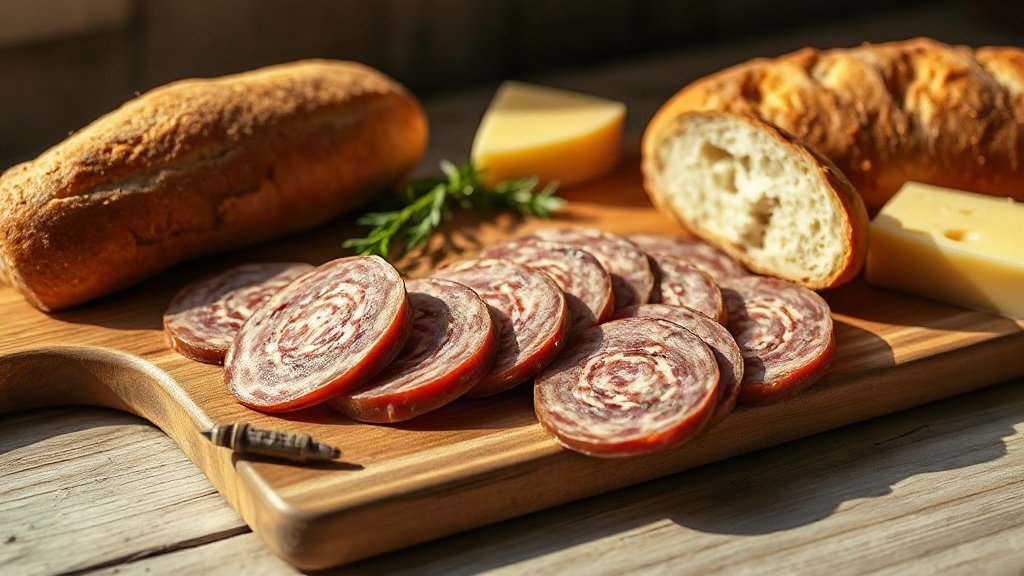
Illustration: AI-generated image
When it comes to Croatian cured meats, kulen stands out for its intense aroma, deep red colour and lingering heat. This spicy, paprika-laced sausage hails from the eastern region of Slavonia, where it has been a centrepiece of winter tables for generations. Often compared to Spanish chorizo or Hungarian kolbász, kulen has a character all its own—firm, rich and satisfyingly fiery.
A tradition from Slavonia's winter tables
Kulen is deeply rooted in the agricultural rhythms of Slavonia. Traditionally, it was made in late autumn or early winter, after the annual pig slaughter (kolinje). Families would prepare large quantities of sausage to last through the cold months, using time-honoured techniques passed down through the generations. Today, kulen is still produced by many households, as well as by small-scale artisans who follow the same principles.
How kulen is made
The making of kulen begins with finely minced pork, typically from the shoulder and leg. The meat is mixed with salt, garlic and—most importantly—sweet and hot ground paprika, which gives the sausage its signature colour and kick. Some recipes include a splash of red wine or a pinch of black pepper, but the essential trio remains paprika, garlic and salt.
The seasoned meat is stuffed into a natural pork casing, often from the large intestine, which gives kulen its characteristic chunky shape. The sausages are then cold-smoked over hardwood, such as beech or hornbeam, for several days. After smoking, they are left to air-dry and mature for several months in a cool, ventilated space. During this time, the kulen loses moisture, concentrates its flavours and develops a dense, sliceable texture. A well-made kulen can be aged for over a year.
PGI protection and what it means
In 2015, Slavonski kulen (or Slavonian kulen) was granted Protected Geographical Indication (PGI) status by the European Union. This means that only kulen produced according to specific traditional methods within the defined geographical area of Slavonia can bear the name. The PGI label guarantees authenticity and helps preserve the craft for future generations. When buying kulen, look for this mark to ensure you are getting the real thing.
How to enjoy kulen
Kulen is best enjoyed simply, allowing its complex flavour to shine. It is typically sliced very thinly—almost translucent—and served at room temperature as part of a traditional hladna plata (cold plate), alongside cheeses like Paški sir, fresh bread, and perhaps some pickled vegetables. Its robust spiciness pairs wonderfully with a glass of dry red wine, such as a full-bodied Plavac Mali or a peppery Teran. It also works beautifully as a pizza topping or folded into scrambled eggs for a savoury breakfast.
Distinctions and similar products
Within the kulen family, you may encounter kulenova seka, a milder, thinner version made from the same spiced meat but stuffed into a narrower casing. It is often a good introduction for those who find the full-strength kulen too intense. Additionally, neighbouring regions have their own variations, but none quite match the fame and flavour of the Slavonian original.
Whether you pick up a piece at a local market in Osijek or ask for it in a traditional konoba, tasting kulen is an essential part of any culinary journey through Croatia's eastern plains.