Punjene Paprike: A Guide to Croatia's Stuffed Peppers
Discover the comforting Balkan classic of peppers stuffed with minced meat and rice, simmered in a rich tomato sauce – a staple of home cooking across continental Croatia.
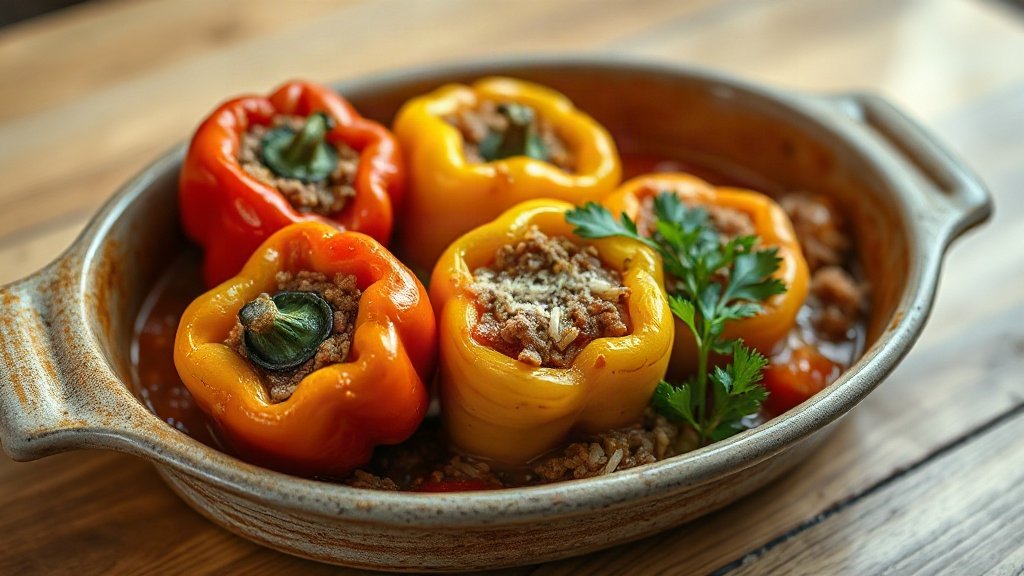
Illustration: AI-generated image
Punjene paprike, or stuffed peppers, are one of the most beloved dishes in continental Croatia. You'll find them on family tables from Slavonia to Zagreb, especially during late summer and autumn when peppers are at their sweetest and most abundant. Unlike their Hungarian cousin, Croatian stuffed peppers are typically braised in a simple tomato sauce rather than a paprika-heavy broth, letting the flavour of the peppers shine.
What are punjene paprike?
The dish consists of whole bell peppers – usually red or yellow, sometimes green – hollowed out and filled with a mixture of minced meat, rice, onion, egg and seasonings. The most common meat is a mix of pork and beef, though some cooks use only pork or add a little smoked bacon for depth. The stuffed peppers are then simmered gently in a tomato-based sauce until tender, and the rice inside absorbs the juices.
Punjene paprike are a true comfort food: hearty, warming and surprisingly easy to prepare. They reflect the Central European and Balkan influences on Croatian cuisine, similar to sarma (stuffed cabbage leaves) but with a lighter, sweeter character.
How they are made
The classic method starts with fresh, firm peppers. The tops are cut off and seeds removed, creating a vessel for the filling. The filling is typically made from raw minced meat mixed with washed rice, finely chopped onion, one egg to bind, and seasonings like salt, pepper, sweet paprika and sometimes parsley or garlic. The peppers are filled loosely – the rice expands during cooking – and then placed upright in a pot.
A simple tomato sauce is poured over, often made from passata, a little flour-and-oil roux for body, and sometimes a spoonful of sugar to balance acidity. The peppers are cooked slowly on the hob for about an hour, or baked in the oven, until the meat is cooked through and the peppers are soft but still hold their shape. Some cooks add a splash of white wine or a bay leaf to the sauce for extra aroma.
Regional variations
In Slavonia, you might find the sauce enriched with smoked paprika or a little hot pepper, reflecting the region's love of robust, spicy flavours. In Zagreb and central Croatia, the sauce is often smoother and sweeter, sometimes finished with a little sour cream stirred in before serving. Along the coast, cooks may use a lighter tomato sauce and add Mediterranean herbs like basil or oregano, though the dish is less common there than in the interior.
Vegetarian versions replace the meat with mushrooms, grated vegetables or lentils, and the peppers are equally delicious served cold as a summer starter or light lunch.
When and how to enjoy them
Punjene paprike are a typical Sunday lunch dish, often served with mashed potatoes, polenta or fresh crusty bread to soak up the sauce. They are also a favourite for large family gatherings and can be made a day ahead – the flavours improve overnight. In many homes, they are a way to preserve the taste of late-summer peppers well into autumn.
If you are visiting Croatia outside the summer months, look for punjene paprike on menus in traditional restaurants or konobas in the continental regions. They are a delicious introduction to the heart of Croatian home cooking.