Brudet: A Guide to Croatia's Traditional Fish Stew
Brudet is the heart of Dalmatian home cooking: a rich, tomato-based fish stew that turns simple catch into something comforting. Here's what makes it special and how to enjoy it like a local.
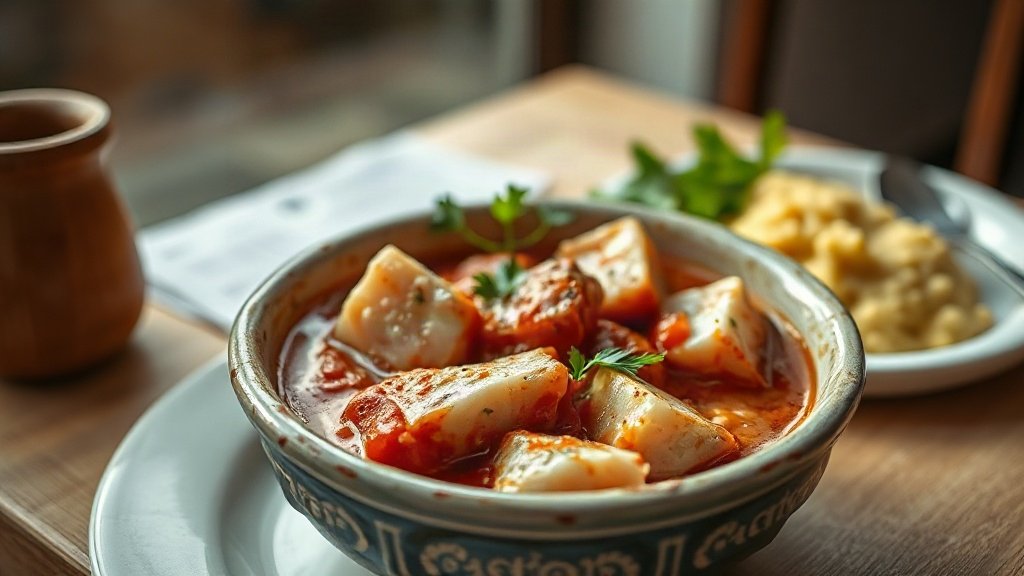
Illustration: AI-generated image
If there's one dish that sums up the spirit of Dalmatian cooking, it's brudet. This humble yet deeply flavourful fish stew has been feeding coastal families for centuries, turning whatever the sea provides into a meal that feels both rustic and refined.
What is brudet?
Brudet (also spelled brodet or brujet depending on the region) is a slow-simmered fish stew. Unlike a thin soup, it has a rich, concentrated sauce made from tomatoes, white wine, garlic, and olive oil. The fish is cooked gently until it falls apart, releasing its flavour into the sauce, which is often thickened slightly and served over soft polenta or crusty bread.
Traditionally, brudet is made with a mix of fish and sometimes shellfish – whatever the fishermen bring in. Rockfish, monkfish, grouper, scorpionfish, and other firm white fish are common, as they hold up well during cooking. In some versions, mussels or clams are added towards the end for extra brininess.
Regional variations across the coast
While the basic idea is the same, every part of the Croatian coast has its own twist. In Istria and the northern Adriatic, the stew might be lighter, with more white wine and fewer tomatoes, sometimes including saffron or a splash of vinegar. Down in Dalmatia, it tends to be tomato-rich and often includes chunks of potato that soak up the sauce. On the islands, like Hvar or Korčula, cooks might add a touch of red wine or even a spoonful of tomato concentrate for depth.
What never changes is the slow, patient cooking. Brudet shouldn't be rushed – the fish is simmered just until the flesh is tender, never boiled hard, so the sauce stays glossy and silky.
How to enjoy brudet like a local
In Croatian homes, brudet is almost always served with a side of creamy polenta (palenta). The polenta acts as a bed, soaking up the savoury sauce, and every spoonful combines a bit of fish, sauce, and soft cornmeal. Some prefer it with fresh bread for mopping, but polenta is the classic partner.
You'll find brudet on the menu at most konobas (family-run taverns) along the coast, especially those that specialise in fresh seafood. The best versions are often made to order, so expect a wait – it's worth it. When ordering, ask what fish is in the brudet that day, as it changes with the catch.
A glass of local white wine, such as Pošip or Malvazija, is the perfect match. The wine's acidity cuts through the richness of the sauce and complements the fish.
A simple way to make it at home
Making brudet at home is straightforward, and you don't need exact measurements. Start by gently frying sliced onion and garlic in good olive oil. Add a few tablespoons of tomato paste or a cup of passata and let it cook for a minute. Pour in a glass of white wine and let it bubble. Then add your fish pieces (cleaned, but with skin on for flavour), along with any potatoes if using, and enough water or fish stock to barely cover. Season with salt, pepper, and a bay leaf. Simmer gently for about 30-40 minutes, without stirring too much, until the sauce thickens and the fish is cooked. Serve over soft polenta with chopped parsley on top.
Whether you taste it in a seaside konoba or from your own stove, brudet is a dish that carries the essence of the Adriatic – simple, honest, and deeply satisfying.