Kulen: A Guide to Slavonia's Spicy Sausage
Discover the rich, smoky flavour of Slavonian kulen, Croatia's prized spicy sausage, and learn how to enjoy it like a local.
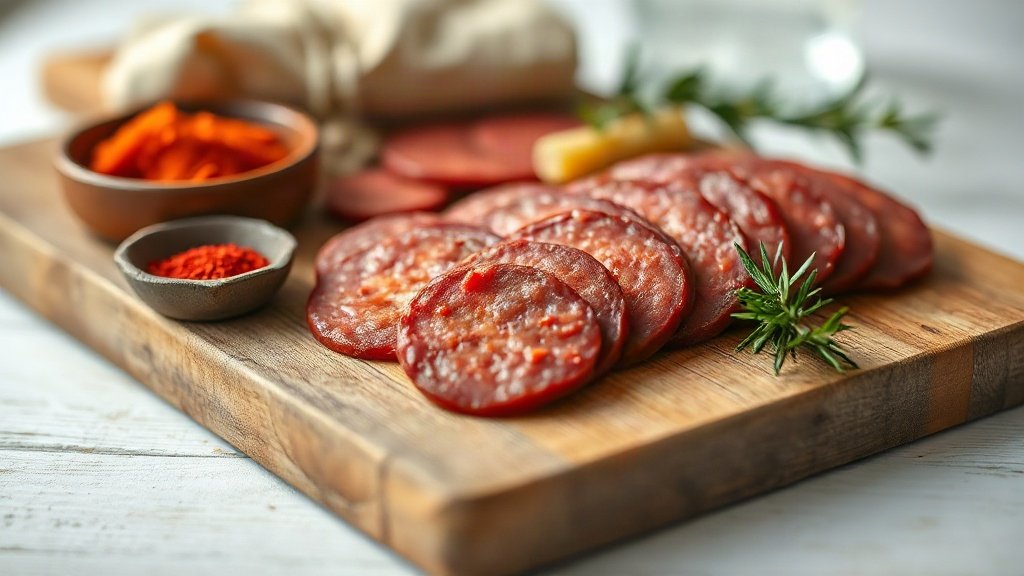
Illustration: AI-generated image
When you think of Croatian charcuterie, pršut often steals the spotlight. But venture east into the flatlands of Slavonia and you'll meet kulen, a sausage with a fiery personality and a devoted following. This cured, smoked and air-dried delicacy is a cornerstone of Slavonian hospitality, sliced thin and served as a proud appetiser at celebrations, family gatherings and everyday meals alike.
What is kulen?
Kulen is a spicy, dry-cured sausage made primarily from minced pork, seasoned generously with hot paprika, garlic, salt and sometimes a splash of red wine. The mixture is stuffed into a natural casing (usually pork intestine) and then undergoes a long process of cold smoking and air drying that can last several months. The result is a firm, deep-red sausage with a complex, fiery flavour and a lingering spicy warmth.
The name 'kulen' is protected in Croatia, and the most famous variety, 'Slavonski kulen', has been granted a protected geographical indication (PGI) by the European Union. This means that authentic Slavonian kulen must be produced in the historic Slavonia region using traditional methods and specific ingredients.
How is kulen made?
Traditional kulen production follows the rhythm of the seasons. In late autumn or early winter, after the pig slaughter (known as svinjokolja), families prepare the sausage mixture. The key is a generous amount of sweet and hot paprika, which gives kulen its characteristic red colour and kick. After stuffing, the sausages are left to absorb the spices for a few days before being cold-smoked over hardwood such as beech, hornbeam or plum. Smoking is slow and intermittent, often over several weeks. Finally, the kulen is hung to air-dry in a cool, ventilated place for at least three to six months, sometimes longer. During this time, it develops its dense texture, intense aroma and deep, rounded spiciness.
How to serve and enjoy kulen
Kulen is almost never cooked. It is meant to be sliced very thin, ideally with a sharp knife, and served at room temperature to allow its flavours to bloom. Arrange the slices on a wooden board alongside other cured meats, cheeses such as škripavac or aged cow's cheese, pickles, and fresh bread. A classic Slavonian domjenak (cold platter) features kulen as the star.
For a simple appetiser, serve kulen slices with cubes of semi-hard cheese and a glass of white wine or a light red. Some locals enjoy it with a slice of fresh tomato or cucumber to temper the heat. Because kulen is quite spicy, it pairs best with mild accompaniments such as creamy kajmak, fresh paprika relish, or simply bread and butter.
Where to find kulen
Kulen is widely available at farmers' markets, delicatessens and supermarkets across Croatia, but the finest examples often come directly from small family producers in Slavonia. In Zagreb, look for it at the Dolac Market or specialised mesnice (butcher shops) that pride themselves on traditional Slavonian products. If you travel to Slavonia, particularly around towns like Osijek, Đakovo or Vinkovci, you'll find kulen on almost every restaurant menu and at local markets.
When buying, look for a firm texture, a deep red colour throughout, and an aroma that is smoky, spicy and slightly tangy. Avoid kulen that appears grey, dry or crumbly, as this may indicate poor storage or too much drying.
Pairing kulen with drinks
Kulen's bold, spicy character calls for drinks that can stand up to it. Locals often pair it with a glass of crisp white wine such as Graševina, the region's most planted grape, whose acidity refreshes the palate. A light, fruity red like Frankovka (Blaufränkisch) also works well. For a stronger pairing, many Slavonians reach for rakija, especially plum or quince, as a traditional aperitif before eating.
Beer lovers will find that a malty lager or a slightly sweet dark beer nicely balances the heat. And for a non-alcoholic option, sparkling water with a squeeze of lemon helps cleanse the palate between bites.
Whether you're exploring Croatia's cured meat traditions or simply looking for a new flavour to add to your next antipasto platter, kulen is a must-try taste of Slavonia's proud culinary heritage.