Octopus Salad: A Guide to Croatia's Beloved Cold Seafood Dish
Learn about the classic Dalmatian starter made with tender octopus, potatoes, onions and a simple olive oil dressing, and why it's a staple of Adriatic cuisine.
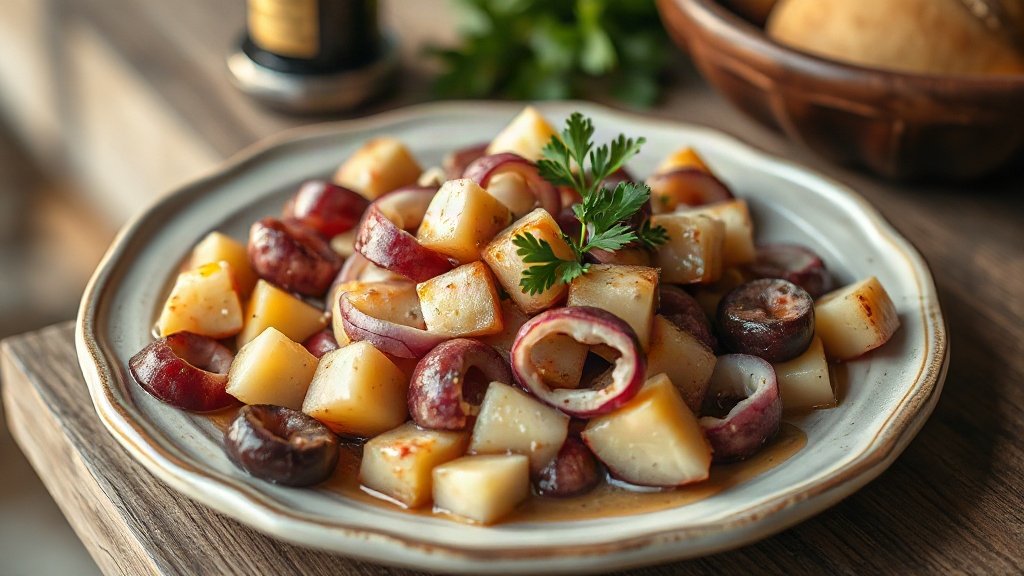
Illustration: AI-generated image
Along Croatia's Adriatic coast, few starters are as emblematic as hobotnica na salatu, or octopus salad. This chilled dish combines tender octopus with waxy potatoes, red onion, fresh parsley, and a generous glug of local olive oil. It appears on menus from Istria to Dubrovnik, especially during the warmer months, and is a perfect introduction to the simplicity of Dalmatian cuisine.
The key to great octopus salad is the octopus itself, which must be cooked until just tender but still with a bit of bite. Traditionally, cooks simmer the whole octopus in water with a cork, or sometimes wine, bay leaves, and peppercorns, before cooling it in its own broth. The slow cooling helps the meat relax and stay moist. Once cool, the octopus is cut into bite-sized pieces and tossed with thinly sliced potatoes, onion, and a dressing of olive oil, lemon juice or vinegar, garlic, salt, and pepper. Some versions add capers, black olives, or a spoonful of chopped tomato, but the classic remains pure and uncluttered.
Hobotnica na salatu is a staple of konobas, the family-run taverns that define eating in Croatia's coastal towns. It is often served as a cold starter before grilled fish or meat, but it also makes a light meal on its own with crusty bread. The dish showcases the quality of local ingredients: the octopus from the clean Adriatic, the potatoes from inland fields, and the olive oil that is a point of pride in every region.
A Coastal Classic
Octopus salad is deeply rooted in the maritime culture of Dalmatia, where fishing families have prepared it for generations. Octopus, or hobotnica, is abundant in the Adriatic, and the dish is a natural way to use the day's catch. Unlike many Mediterranean countries that grill octopus, Croats often boil it and serve it cold, which highlights its delicate flavour and texture. The salad is especially popular in the summer, as its cool, refreshing nature suits the heat.
In Istria and Kvarner, the salad may be dressed with white wine vinegar rather than lemon, and sometimes a touch of mustard. In Dalmatia, it is common to add boiled potatoes, which absorb the dressing and make the dish more filling. Some households add chopped hard-boiled eggs or capers, but purists insist the only additions should be onion, parsley, and olive oil.
How to Enjoy It
When ordering in a restaurant, octopus salad is typically listed among the hladna predjela (cold starters). It pairs beautifully with a glass of local white wine, such as Pošip or Malvazija. A slice of fresh bread is essential for mopping up the olive oil left on the plate. Because the dish is simple, quality matters: the best versions use octopus that was cooked the same day and potatoes that hold their shape.
Making It at Home
Recreating octopus salad at home is achievable with a little patience. Start with a fresh or frozen octopus (frozen is often more tender). Simmer it gently in water until a fork pierces the thickest part easily, which can take 30 to 60 minutes depending on size. Let it cool in the cooking liquid, then peel off the skin if desired. Cut the octopus into small pieces. Boil potatoes until just tender, cool and slice them. Combine with finely chopped red onion, parsley, crushed garlic, olive oil, lemon juice or vinegar, salt and pepper. Toss and chill for at least an hour to let flavours meld. Serve at room temperature, never ice-cold, to appreciate the olive oil's aroma.