Brač Stone: A Guide to Croatia's White Gold
The island of Brač has been quarried for its luminous white limestone since Roman times, shaping some of Croatia's most iconic architecture and a living stonemasonry tradition.
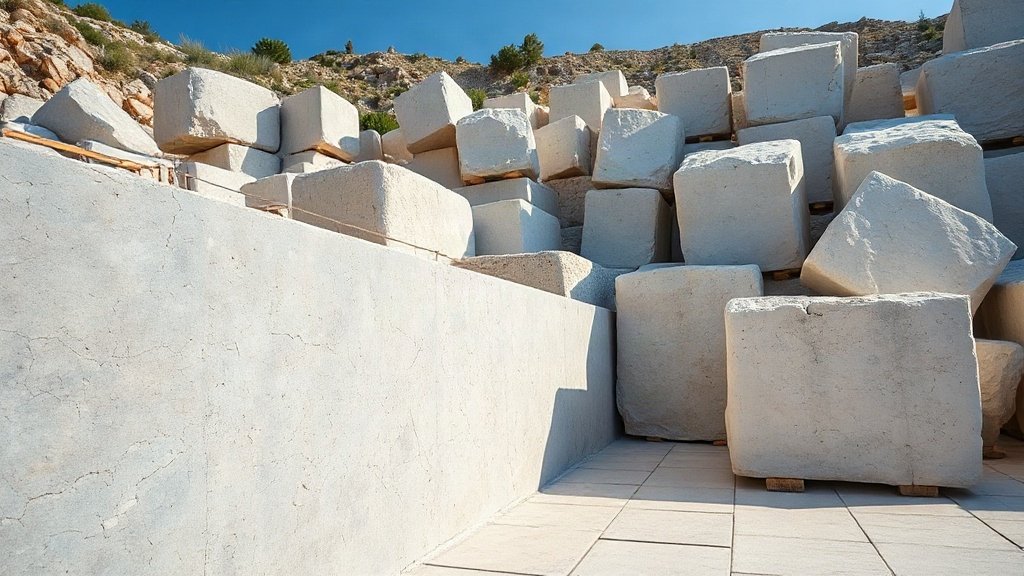
Illustration: AI-generated image
Brač stone is one of Croatia's most treasured natural resources—a fine-grained, luminous white limestone that has been quarried on the island of Brač for over two millennia. Renowned for its beauty and durability, it has shaped the visual identity of Dalmatian architecture and remains a living craft tradition today.
A History Carved in Stone
The use of Brač stone dates back to antiquity. The Romans recognised its quality and used it extensively in the construction of Diocletian's Palace in Split, which remains one of the best-preserved Roman monuments in the world. Throughout the Middle Ages and Renaissance, the stone was shipped across the Adriatic, adorning churches, palaces, and public buildings throughout Dalmatia and beyond.
What Makes Brač Stone Special
Brač limestone is prized for its uniform white colour, fine grain, and high density. Its low water absorption and resistance to weathering make it ideal for both structural and decorative purposes. When polished, it takes on a soft sheen that glows in the Mediterranean sun—a hallmark of Dalmatian towns.
Famous Examples Across Croatia
The legacy of Brač stone is woven into Croatia's architectural heritage. Beyond Diocletian's Palace, it was used in the construction of Šibenik's Cathedral of St. James, a UNESCO World Heritage site, and numerous other historic buildings along the coast. Even today, it remains a preferred material for restoration and new construction that seeks to harmonise with traditional aesthetics.
A Living Craft
Stonemasonry on Brač is not merely a historical footnote; it is a vibrant tradition passed down through generations. The island is home to a dedicated stonemasonry school where apprentices learn age-old techniques such as hand carving, letter cutting, and sculptural work. Families in villages like Pučišća have worked the stone for centuries, and their skills are still in demand for projects around the world.
Where to See Brač Stone Today
To appreciate Brač stone firsthand, visitors can explore the narrow streets of Split and Trogir, where white limestone facades create a timeless atmosphere. On the island itself, the town of Pučišća showcases the stone in its churches, houses, and public squares. The surrounding quarries, some still active, offer a glimpse into the source of this remarkable material, though access may vary.
Brač stone is more than a building material; it is a symbol of Croatian identity and craftsmanship, connecting ancient history with the present day.