Island Hopping by Ferry in Croatia: A Practical Guide
From short hops to car ferries, here's how to use Croatia's extensive ferry network to explore the Adriatic islands.
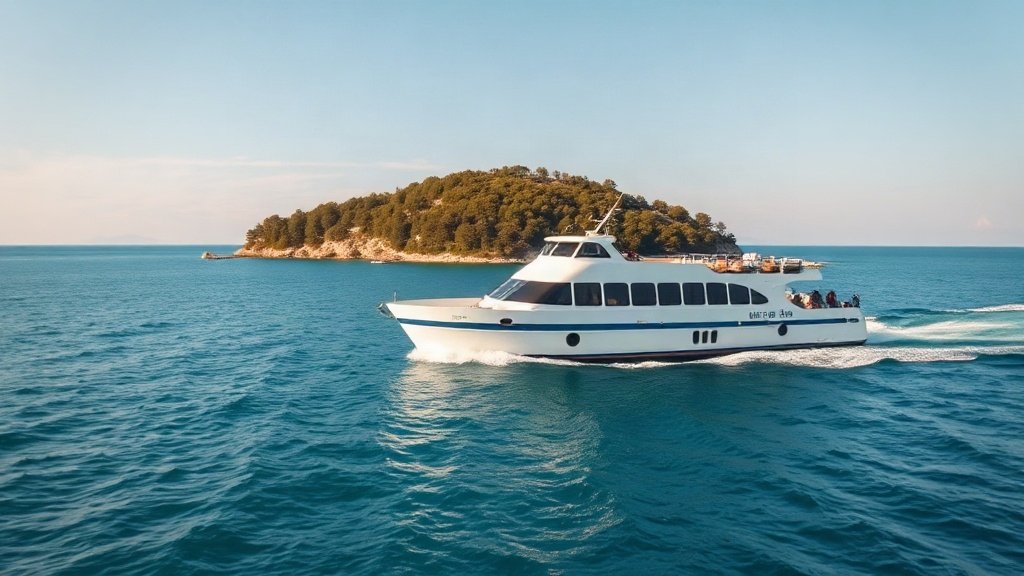
Illustration: AI-generated image
Croatia's coastline is scattered with over a thousand islands, and for many travellers, the ferry is not just a mode of transport but a memorable part of the journey. The country's ferry network is well developed, connecting the mainland with inhabited islands and linking islands to one another. Whether you are planning a day trip or a longer island-hopping adventure, understanding how the system works will help you travel with confidence.
Types of Ferries
There are two main types of vessels you'll encounter: car ferries (trajekti) and passenger catamarans (katamarani). Car ferries are larger and slower, accommodating vehicles, bicycles and foot passengers. They operate on routes where the distance or demand justifies carrying cars, such as Split to Supetar on Brač or Zadar to Preko on Ugljan. Catamarans are faster, carry foot passengers only, and are ideal for day trips or when time is limited. They connect major coastal cities with island towns, like Split to Hvar or Dubrovnik to the Elaphiti Islands.
Main Routes and Hubs
The busiest ferry hubs are Split and Dubrovnik, followed by Zadar, Rijeka and Šibenik. From Split, you can reach the central Dalmatian islands: Brač, Hvar, Vis, Korčula, and Lastovo. From Dubrovnik, ferries serve the Elaphiti Islands (Koločep, Lopud, Šipan) and Mljet. Zadar is the gateway to Ugljan, Pašman and Dugi Otok, while Rijeka connects to the Kvarner islands of Cres, Lošinj, Krk and Rab. Some islands are also connected to each other by seasonal lines, making it possible to island-hop without returning to the mainland.
Note that some islands, like Pag and Vir, are linked by bridges and do not require a ferry, but smaller, more remote islands can only be reached by sea. Frequencies increase dramatically in summer, with many routes running several times a day, while in winter the schedule is reduced to a few sailings per week on peripheral routes.
Booking and Tickets
Tickets can be purchased at port offices, from ticket kiosks, or online through the main operator's website. For foot passengers on catamarans, it is usually sufficient to buy a ticket shortly before departure, but in peak season (July and August) it is wise to book a day or two ahead. For car ferries, especially on popular routes like Split–Supetar or Split–Stari Grad, booking in advance is essential during summer and on weekends, as space for vehicles sells out quickly. Pedestrian tickets are rarely sold out, but arriving early secures a better seat.
Tips for Smooth Sailing
- Arrive at least 30 minutes before car ferry departures; check-in closes 10–15 minutes before sailing.
- Schedules can change due to weather, especially in winter; always confirm the latest departure locally or online.
- Catamarans are faster but may have luggage restrictions and limited outdoor deck space.
- Some car ferries have open decks with excellent views—prepare for sun and wind.
- If island hopping, study the connections in advance, as not all islands are directly linked.
Travelling by ferry in Croatia is more than a practical necessity—it is a scenic experience in itself. Gliding past pine-clad shores, with the Adriatic stretching to the horizon, is a highlight of any visit. With a little planning, you can turn the ferry ride into an integral part of your Croatian adventure.