Pula Arena: A Guide to Croatia's Roman Amphitheatre
Discover the history and cultural significance of Pula's ancient amphitheatre, still a vibrant venue today.
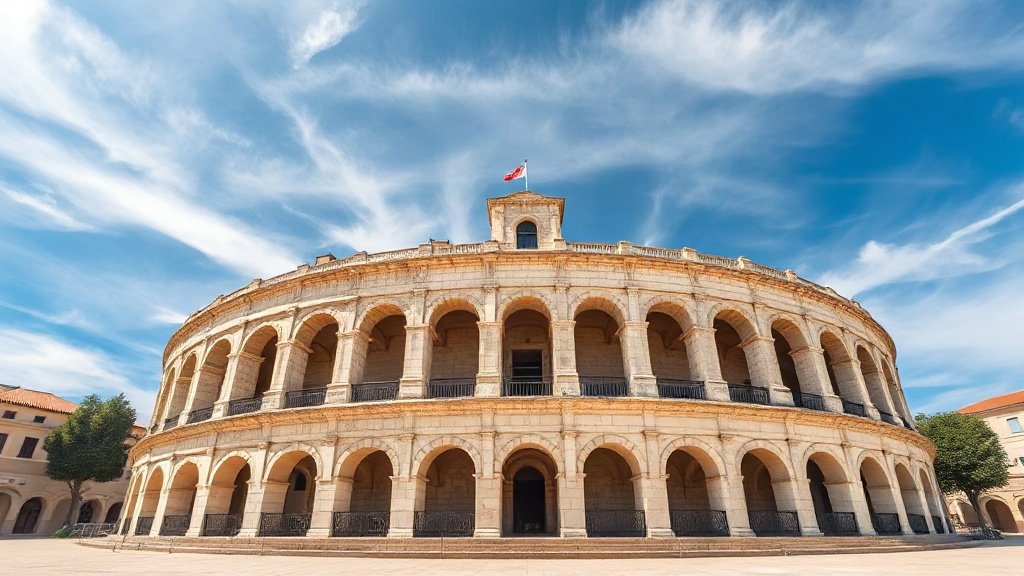
Illustration: AI-generated image
Standing proudly on the southwestern tip of the Istrian peninsula, Pula Arena is one of the best-preserved Roman amphitheatres in the world. Built in the 1st century AD, it remains a striking symbol of the city's ancient past and a dynamic cultural venue for modern audiences.
A Roman Masterpiece
Constructed during the reign of Emperor Vespasian, around the same time as Rome's Colosseum, the arena was designed to host gladiatorial contests and public spectacles. Its elliptical form measures roughly 132 by 105 metres, with a capacity believed to have been around 20,000 spectators. The structure is built from local limestone, quarried from nearby sites, and features four towers that once provided access and support for a velarium, a retractable awning that shaded the crowd.
Unlike many ancient arenas that fell into ruin, Pula's amphitheatre has survived remarkably intact. Its outer wall consists of two tiers of arches, with a third storey of rectangular openings, while the interior retains much of its original stone seating and underground passages where gladiators and animals awaited their turn in the arena.
From Gladiators to Film Stars
Today, the arena is far from a silent relic. It serves as a spectacular backdrop for cultural events, most notably the Pula Film Festival, one of the oldest film festivals in Europe, held annually since 1954. The open-air venue regularly hosts concerts, opera performances, and theatrical productions, drawing audiences who come to experience the arts under the stars in a setting steeped in history.
For visitors, exploring the arena offers a tangible connection to Roman engineering and entertainment. Walking through the underground chambers reveals the intricate system of corridors and holding areas, while climbing to the upper tiers rewards with panoramic views of Pula's harbour and the Adriatic Sea. The arena is also beautifully illuminated at night, creating a striking silhouette against the Istrian sky.
A Living Monument
Pula Arena is more than an archaeological site; it is a living monument that continues to shape the cultural identity of Istria. Its enduring presence tells the story of a city that has been shaped by Roman, Byzantine, Venetian and Austro-Hungarian influences, yet remains proudly Croatian at heart. Whether you are a history enthusiast, architecture lover, or simply seeking a memorable experience, the arena offers a rare chance to step back in time while enjoying the vibrancy of contemporary culture.
As you plan your visit, remember that the arena is best appreciated both up close and from a distance—from the narrow streets of Pula's old town that lead to its gates, or from the waterfront where its massive form dominates the horizon. No matter how you approach it, the Pula Arena stands as a testament to human creativity and resilience, inviting you to become part of its long story.