Stari Grad Plain: A Guide to Croatia's Ancient Greek Agricultural Landscape
Discover the UNESCO-listed Stari Grad Plain on Hvar, where ancient Greek field divisions still shape the landscape after 2,400 years.
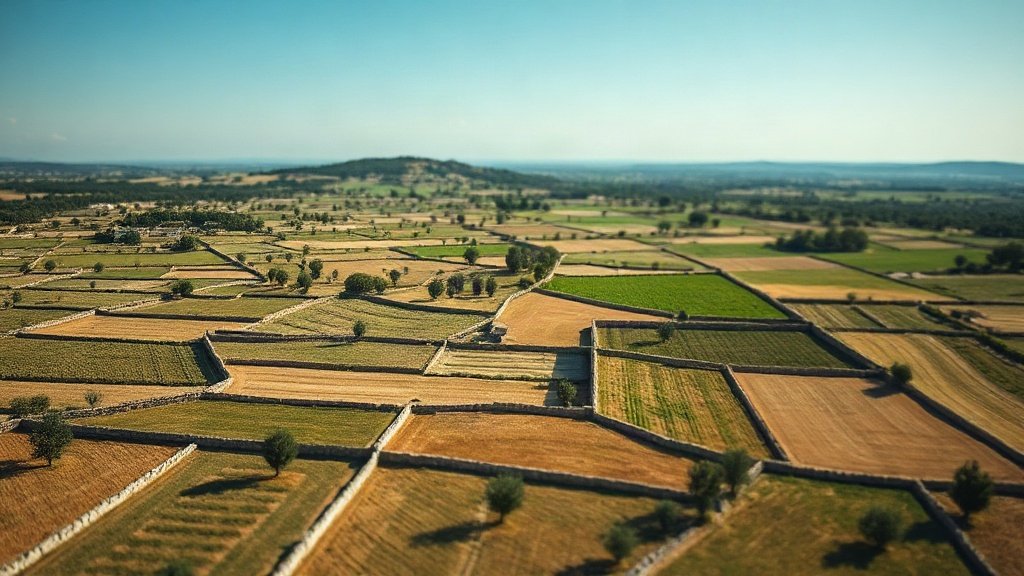
Illustration: AI-generated image
On the sunny island of Hvar, between the towns of Stari Grad and Vrboska, lies a remarkable cultural landscape that has remained almost unchanged for over two millennia. The Stari Grad Plain, inscribed on the UNESCO World Heritage List in 2008, is a living testament to the agricultural genius of the ancient Greeks who colonised this part of the Adriatic in the 4th century BC.
A Window into Antiquity
In 385/384 BC, Greek settlers from the island of Paros founded the colony of Pharos, today's Stari Grad. They divided the fertile plain into a regular grid of rectangular plots, each measuring approximately 180 by 900 metres, using dry stone walls as boundaries. This system, known as the chora, was designed to allocate land fairly among the colonists and to make the most of the island's arable soil.
What makes the Stari Grad Plain so exceptional is that this ancient cadastral layout has survived largely intact to the present day. The stone walls, called suhozidi in Croatian, still mark the original field boundaries, and the same crops—olives and grapes, along with wheat and other Mediterranean staples—continue to be cultivated in many of the plots.
A Landscape of Stone and Green
Walking or cycling through the plain, you'll see a patchwork of small fields enclosed by low, dry-laid stone walls. Among them stand small stone shelters, known locally as trims, which were used by farmers for storage or as temporary shelter. These simple structures, built without mortar, are another link to the ancient past.
The plain covers an area of about 1,376 hectares and is still actively farmed. Olive groves and vineyards dominate, with many local families continuing the traditions of their ancestors. The landscape is not a museum piece; it is a working agricultural area, which adds to its authenticity and charm.
What to See and Do
The Stari Grad Plain is best explored slowly, on foot or by bicycle. There are no entrance gates or ticket booths—the plain is an open landscape, crisscrossed by a network of gravel paths and quiet country roads. Starting from Stari Grad or Vrboska, you can wander among the ancient fields, stop to admire the stone walls, and enjoy the peaceful rhythm of island life.
For a deeper understanding of the area's history, a visit to the Stari Grad Museum, housed in the Renaissance palace of the Hektorović family, provides context through archaeological finds and exhibits. The nearby fortified summer residence of Petar Hektorović, Tvrdalj, built in the 16th century, also incorporates elements of the ancient field system and is worth a look.
Practical Tips for Your Visit
Spring and autumn are ideal times to visit, when temperatures are mild and the landscape is lush. Summer can be hot, so bring plenty of water, sun protection, and comfortable walking shoes. Since the plain is an active agricultural area, please respect private property and do not disturb crops or walls.
The plain is easily reached from either Stari Grad or Vrboska on foot, and many visitors choose to cycle. Bicycles can be hired locally, and the terrain is mostly flat and suitable for all levels of fitness. Take your time, bring a camera, and soak in the timeless atmosphere of this ancient Greek landscape in the heart of Dalmatia.