The Croatian Apoxyomenos: A Guide to the Ancient Bronze Athlete
Discovered in the Adriatic in 1996, the Croatian Apoxyomenos is one of the best-preserved ancient bronze statues in the world. Here's what makes it so special and where to see it.
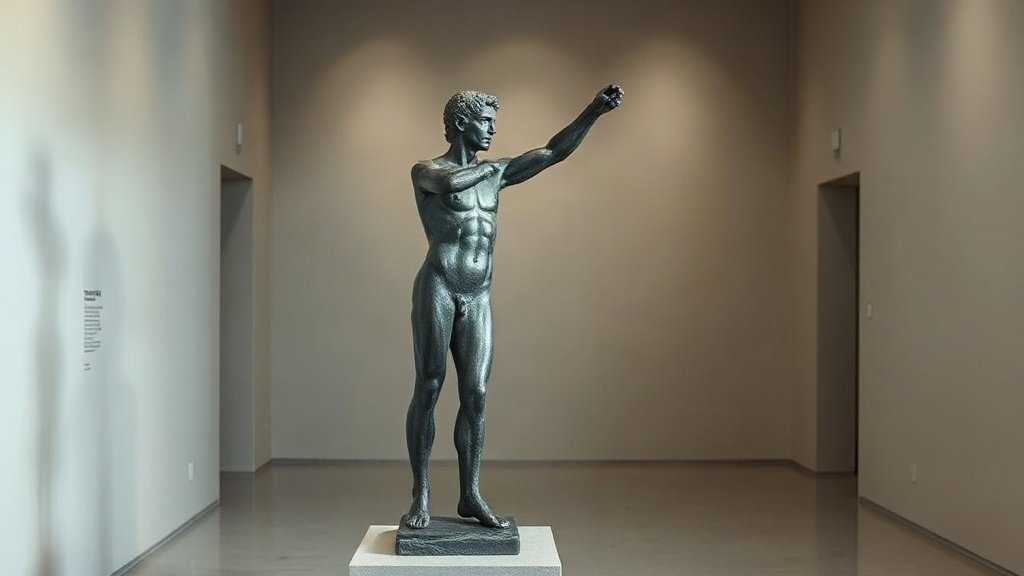
Illustration: AI-generated image
In 1996, a diver exploring the seabed near the islet of Vele Orjule, off Lošinj, spotted something unusual half-buried in sand. It turned out to be a bronze statue of an athlete, nearly two metres tall and almost perfectly preserved. Today it is known as the Croatian Apoxyomenos, and it has become one of the most important ancient artefacts found in the Adriatic.
The statue depicts an apoxyomenos – a Greek term for an athlete scraping oil, sweat and dust from his body with a curved tool called a strigil. He stands with his weight on one leg, one arm extended, a pose that captures a private moment after competition. Made of bronze, it dates from around the 1st century BC or 1st century AD, a period when Greek sculptors were celebrated throughout the Roman world.
From seabed to museum
The statue lay at a depth of around 45 metres, which helped preserve it from the ravages of time and human interference. After its discovery, it was carefully raised from the sea in 1999 and taken to a conservation laboratory. Restoration work took several years, as experts removed marine encrustations and stabilised the ancient metal. The process revealed fine details such as the athlete's inlaid copper lips and nipples, and the intricate rendering of his hair.
Once restoration was complete, the Apoxyomenos travelled to major museums across Europe and beyond, from Florence to Tokyo, before finally settling in a purpose-built museum on the island of Lošinj.
Why the statue matters
Large bronze statues from antiquity are extremely rare. Most were melted down centuries ago for their metal. The Croatian Apoxyomenos is one of only a handful of near-complete examples to survive from the ancient Mediterranean. Its quality suggests the work of a master sculptor, and its state of preservation allows visitors to appreciate the subtle modelling of muscle and skin, as well as the artist's attention to anatomical detail.
Beyond its artistic value, the statue is a tangible link to the maritime trade and cultural exchange that shaped the eastern Adriatic. It may have been part of a ship's cargo, destined for a wealthy Roman villa, when it was lost at sea. Whatever its original journey, its rediscovery has added a new chapter to Croatia's rich archaeological heritage.
Where to see it
The Apoxyomenos is on permanent display in a dedicated museum in Mali Lošinj, a town on the island of Lošinj in the northern Adriatic. The building was designed around the statue, allowing visitors to view it from different angles in a space that evokes the undersea world where it was found. The museum also presents the story of the discovery, the conservation process and the wider context of ancient bronze sculpture.
For anyone travelling along the Kvarner coast, a visit to the Museum of Apoxyomenos offers a rare chance to stand face-to-face with a masterpiece that spent two thousand years hidden beneath the waves.