Pašticada: A Guide to Croatia's Slow-Cooked Dalmatian Beef Stew
Pašticada is the crown jewel of Dalmatian cuisine, a rich beef stew marinated in wine and herbs, slow-cooked with prunes and prošek, and served with gnocchi. Here's what makes it so special.
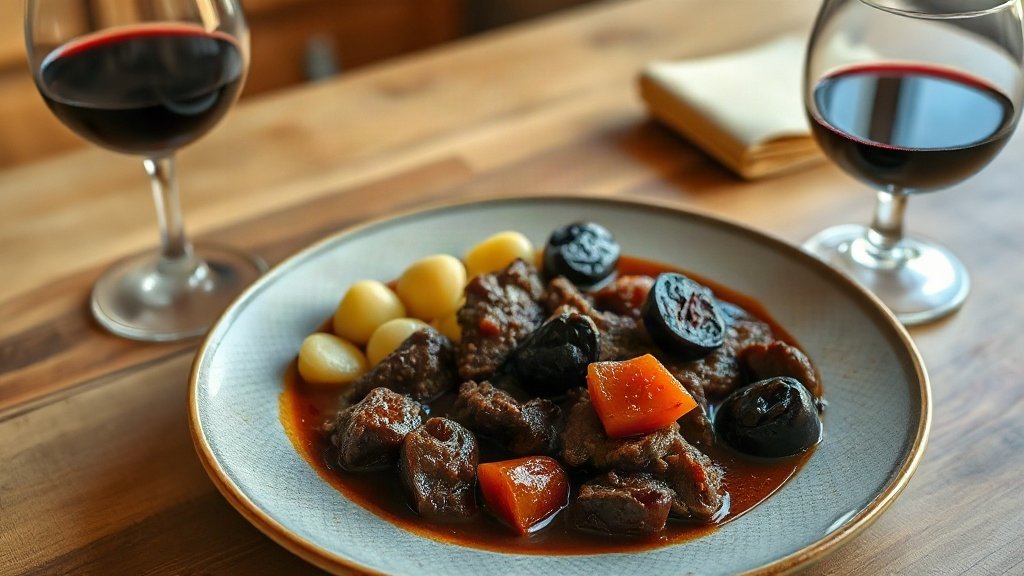
Illustration: AI-generated image
If there is one dish that captures the soul of Dalmatian cooking, it is pašticada. This slow-cooked beef stew, rich with wine, prunes, and aromatic herbs, is a staple at weddings, holidays, and Sunday lunches along Croatia’s southern coast. Its complex, sweet-savoury flavour and meltingly tender texture make it a true labour of love — and a must-try for any visitor.
What is Pašticada?
Pašticada (pronounced pash-tee-tsah-dah) is a traditional Dalmatian beef dish. The meat — usually a whole cut like topside or rump — is marinated for up to two days in a mixture of red wine vinegar, garlic, and herbs such as rosemary and bay leaf. After marinating, it is seared and then braised slowly with onions, root vegetables, tomato paste, prunes, and a splash of prošek, Dalmatia’s sweet dessert wine. The result is a dark, glossy sauce with a hint of sweetness and a deep, almost gamey richness.
The dish likely originated from Venetian influences, as Dalmatia was under Venetian rule for centuries, but locals have made it their own with local ingredients and techniques. Each family has its own closely guarded recipe, and arguments over the “right” way to make pašticada are common — though always friendly.
The Art of Marinating
The key to great pašticada lies in the marinade. The beef is traditionally pierced with slivers of garlic and cloves before being submerged in a mixture of red wine vinegar and sometimes red wine. This marinade not only tenderises the meat but also infuses it with flavour. Many cooks add a sprig of rosemary, a few bay leaves, and peppercorns. The meat is left to marinate for 24 to 48 hours in a cool place, turning occasionally.
After marinating, the meat is dried well and seared in hot oil or lard until browned on all sides. This step builds flavour through the Maillard reaction. The marinade is then often reserved to add later during braising.
Cooking Low and Slow
Once seared, the beef is braised in a heavy pot with a generous amount of finely chopped onions, carrots, celery, and sometimes pancetta or prosciutto for extra depth. Tomato concentrate is added for colour and body, along with a little sugar or honey to balance the acidity. The reserved marinade, or fresh wine, is poured over, and the pot is covered and left to cook gently for several hours — traditionally over a low flame or in a wood-fired oven. The meat should be so tender it falls apart when pierced with a fork.
Towards the end of cooking, prunes and a glass of prošek are added. The prunes melt into the sauce, giving it a subtle sweetness and silky texture. The sauce is then often blended or passed through a sieve until smooth, then reheated with the sliced beef.
Serving and Pairing
Pašticada is traditionally served with homemade gnocchi, but it is also excellent with mashed potatoes, fresh pasta, or even polenta. The sweet-savoury sauce demands a robust red wine — a Plavac Mali from the Pelješac peninsula or a Dingač is the classic pairing. A side of blitva (Swiss chard and potatoes) or a simple green salad balances the richness.
Because the dish is time-consuming, it is often reserved for special occasions. However, many konobas (traditional taverns) in Dalmatia serve excellent versions year-round, making it accessible to travellers eager to taste authentic local cuisine.
How to Enjoy It Like a Local
When ordering pašticada at a restaurant, expect a generous portion of sliced beef smothered in dark sauce, with a pile of gnocchi on the side. Locals often start with a light appetiser such as pršut (dry-cured ham) and cheese, followed by the stew as the main course. A glass of rakija before the meal and a digestif afterwards complete the experience.
If you are lucky enough to be invited to a Dalmatian home for a celebration, you will likely encounter pašticada. The host will proudly tell you it has been cooking for two days — and they will probably be right.